
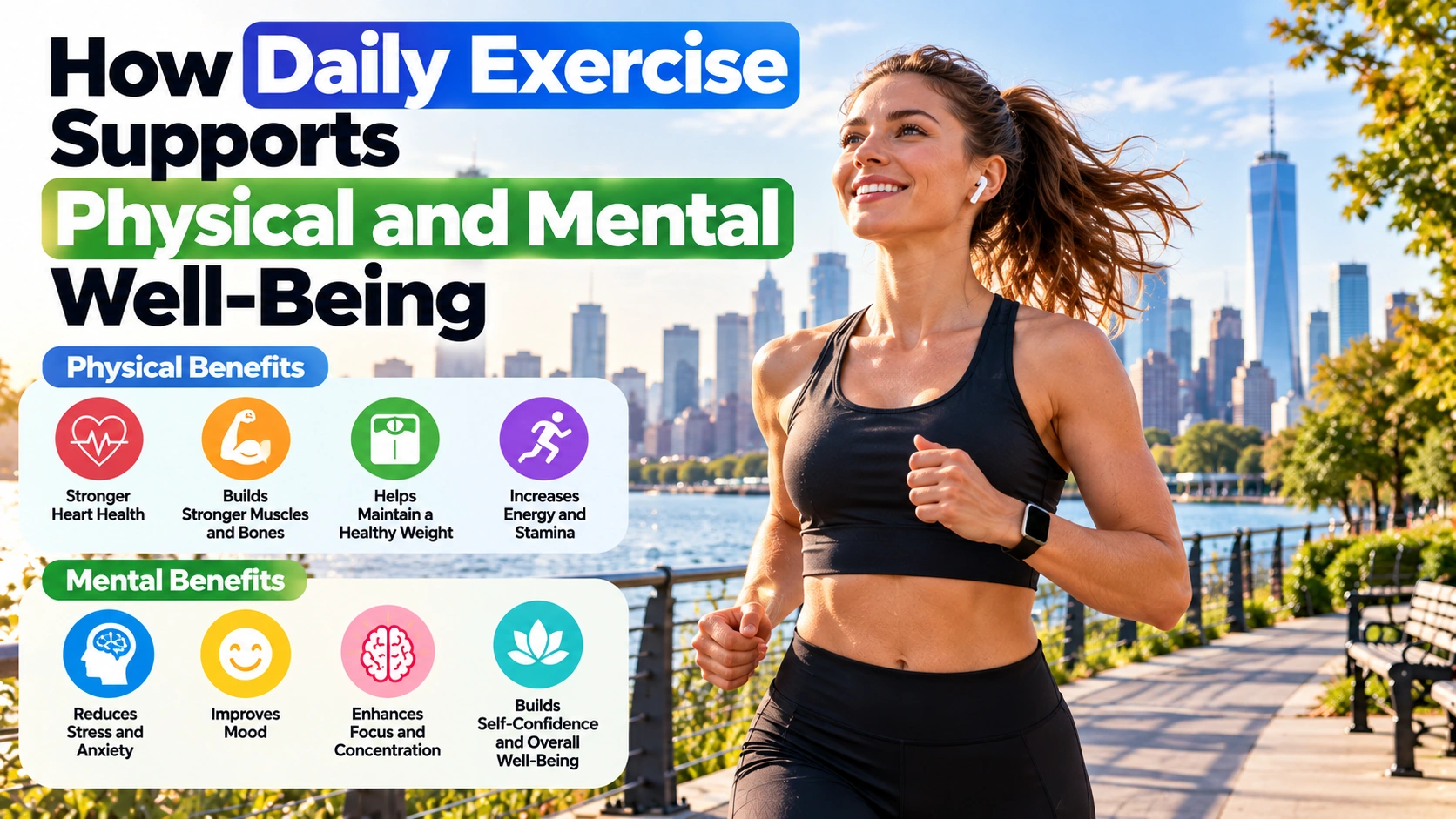
How Daily Exercise Supports Physical and Mental Well-Being

September 28, 2026
Regular exercise is one of the simplest ways to support overall health. Physical activity does not always require a gym membership, expensive equipment, or hours of intense workouts. Walking, cycling, stretching, dancing, swimming, or participating in a favorite sport can all contribute to a more active lifestyle. When exercise becomes part of a daily routine, it can benefit the body while also supporting emotional and mental well-being.
Supports Heart and Cardiovascular Health
The heart is a muscle that benefits from regular physical activity. Activities such as brisk walking, jogging, cycling, and swimming can get the heart working harder and improve cardiovascular fitness. Regular movement also supports healthy circulation and can help people maintain an appropriate level of physical fitness.
Being active throughout the day can be especially useful for people who spend many hours sitting at a desk or working from home. Taking short walking breaks, using stairs instead of elevators, and stretching between tasks are simple ways to add more movement to a routine.
Helps Maintain a Healthy Weight
Exercise uses energy and can complement healthy eating habits when maintaining body weight is a goal. Regular physical activity can help increase daily energy expenditure while supporting muscle development and overall fitness.
A consistent approach is generally easier to maintain than occasional intense workouts. Someone who walks for 30 minutes most days may find it easier to stay active than someone who exercises intensely only once a week. The most useful activity is often one that fits comfortably into a person’s lifestyle.
Builds Strength and Supports Mobility
Strength-based activities can help develop and maintain muscle. Bodyweight exercises such as squats, lunges, push-ups, and planks can be performed at home with little or no equipment. Resistance bands and weights can also be incorporated as fitness levels develop.
Maintaining strength can support everyday activities such as climbing stairs, carrying groceries, getting up from a chair, and performing household tasks. Stretching and mobility exercises may also help maintain flexibility and comfortable movement.
Can Support Better Sleep
Physical activity can contribute to healthier sleep habits. People who exercise regularly may find it easier to establish a consistent sleep routine. Daytime activity can also provide a healthy contrast to long periods of inactivity.
However, exercise timing can matter for some people. Very intense activity immediately before bedtime may make it harder to relax, while gentle stretching or a relaxed walk may feel more suitable in the evening.
Supports Mental Well-Being
Exercise is not only about physical fitness. Physical activity can also support emotional well-being. During exercise, the body undergoes physiological changes that can influence mood and stress responses.
A walk outdoors, a workout session, or even a few minutes of stretching can provide a break from work, household responsibilities, and screen time. This change of environment and activity can help people feel refreshed.
Exercise should not be viewed as a replacement for professional mental health care when someone is experiencing significant emotional difficulties. Instead, it can be one part of a broader approach to maintaining well-being.
May Improve Energy and Focus
Although exercise requires energy, regular movement can help people feel more energetic during the day. A short walk during a work break may provide an opportunity to step away from prolonged sitting and return to a task feeling more refreshed.
Physical activity can also create structure in a daily routine. Scheduling a morning walk, lunchtime workout, or evening cycling session can provide a healthy transition between different parts of the day.
Makes Daily Movement Easier
The benefits of exercise do not depend entirely on formal workouts. Everyday activities can contribute to a more active lifestyle. Walking to nearby destinations, gardening, cleaning, playing with children, taking the stairs, and standing up regularly during the workday all increase movement.
For people who are new to exercise, starting gradually can make the habit easier to maintain. Even a short daily walk can be a useful starting point before gradually increasing duration or intensity.
Creating a Sustainable Exercise Routine
A successful exercise routine should be realistic. Someone with a busy schedule may benefit from several short activity sessions rather than trying to find one long block of free time.
Setting simple goals can also help. For example, a person might begin with a 20-minute walk five days a week and gradually add strength or flexibility exercises. Choosing activities that are enjoyable can make consistency easier.
Conclusion
Daily exercise can support cardiovascular fitness, strength, mobility, healthy weight management, sleep, energy, and mental well-being. The goal does not have to be athletic performance. Consistent movement that fits into everyday life can make an important contribution to overall health. By starting with manageable activities and building a sustainable routine, people can make physical activity a natural part of their lifestyle.