
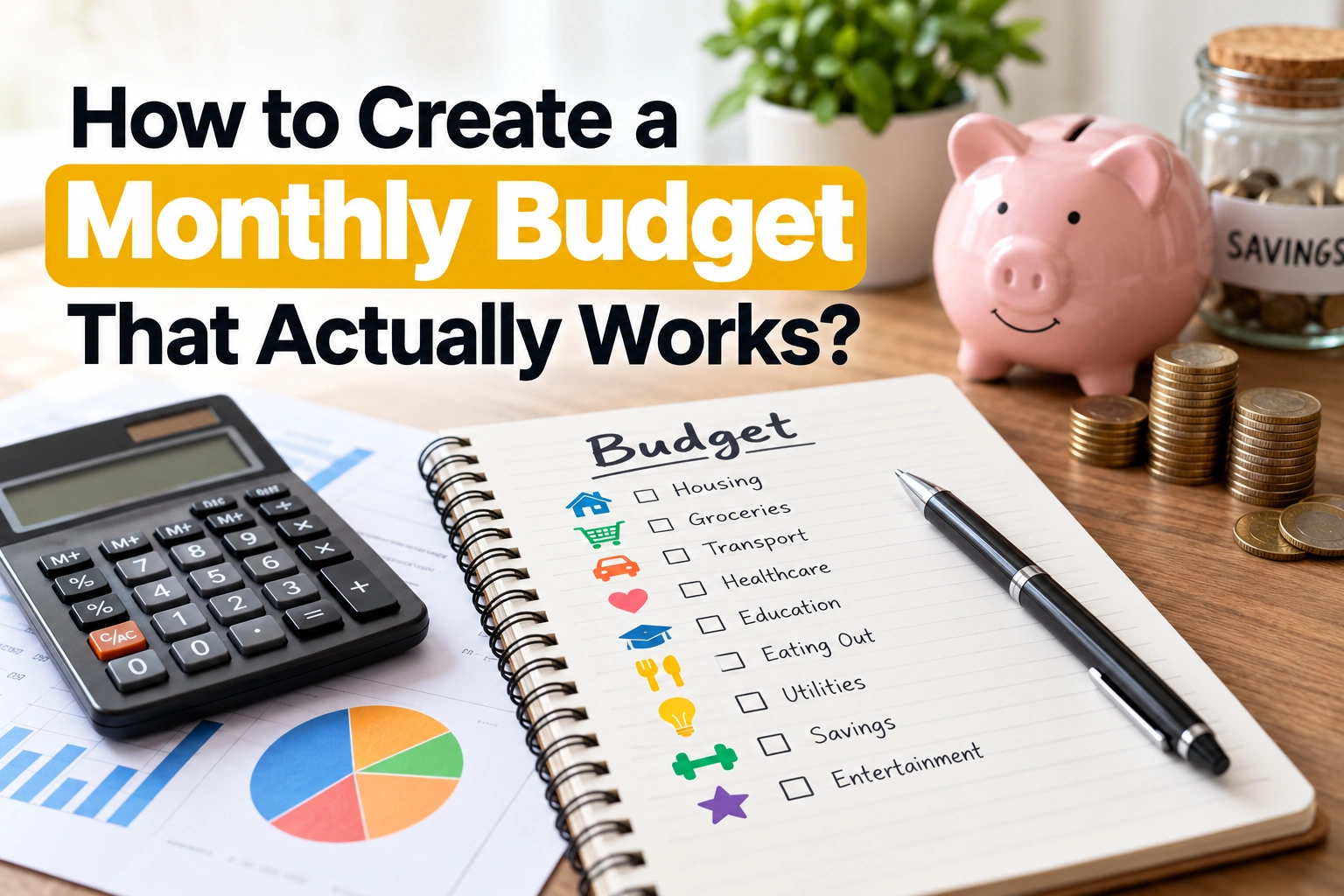
How to Create a Monthly Budget That Actually Works?

September 28, 2026
Creating a monthly budget is one of the most practical ways to understand where your money goes and make better financial decisions. A budget does not have to mean giving up everything you enjoy or tracking every small purchase obsessively. Instead, it should provide a clear picture of your income, expenses, savings, and financial priorities.
Start With Your Monthly Income
The first step is to determine how much money you have available each month. If you receive a regular salary, this may be straightforward. For freelancers, business owners, or people with variable income, it may be better to use a conservative estimate based on previous months.
Focus on the amount you actually receive after applicable deductions rather than your gross income. This gives you a more accurate amount to work with when planning your monthly expenses.
If your income changes from month to month, consider creating a basic budget around your minimum expected income. Additional income can then be directed toward savings, debt repayment, or other financial goals.
Track Where Your Money Goes
Before setting spending limits, look at your actual expenses. Review bank statements, payment records, bills, and cash spending from the previous month.
Divide expenses into broad categories such as housing, utilities, groceries, transportation, debt payments, entertainment, subscriptions, shopping, and savings.
This exercise can reveal spending patterns that may otherwise go unnoticed. A few small purchases may seem insignificant individually but can add up considerably over an entire month.
Separate Needs From Wants
Not every expense has the same level of importance. Essential expenses may include rent or mortgage payments, groceries, utilities, transportation, insurance, and necessary debt payments.
Wants may include dining out, entertainment, premium subscriptions, shopping, and other discretionary purchases.
The goal is not necessarily to eliminate wants. Instead, identifying them helps you decide how much money you can comfortably spend on them after covering essential expenses and financial priorities.
Set Savings as a Budget Category
One common mistake is treating savings as whatever remains at the end of the month. In many cases, there may be little left by then.
Instead, include savings as part of your monthly budget from the beginning. You can set aside a specific amount or percentage of income depending on your circumstances.
Savings can be divided into different goals, such as an emergency fund, travel, education, a major purchase, retirement, or other long-term objectives.
Plan for Irregular Expenses
Some expenses do not appear every month but can still disrupt a budget when they arrive. Examples include annual insurance premiums, vehicle maintenance, school expenses, festivals, gifts, medical costs, or home repairs.
Estimate these expenses over the year and set aside a small amount each month when possible. This approach can make large periodic expenses easier to manage.
Give Yourself a Reasonable Spending Allowance
A budget that leaves no room for enjoyment can quickly become frustrating. Consider creating a specific amount for entertainment, eating out, hobbies, or personal purchases.
Having a defined amount allows you to enjoy discretionary spending without constantly worrying about whether every purchase will damage your financial plan.
Use Simple Budgeting Categories
You do not need dozens of categories to create an effective budget. Too much detail can make tracking unnecessarily complicated.
Start with a manageable number of categories and adjust them as you learn more about your spending habits. Digital banking tools, spreadsheets, budgeting apps, or a simple notebook can all work.
The best system is the one you will actually use consistently.
Review Your Budget Every Month
A budget is not a one-time document. Your expenses, income, priorities, and circumstances can change.
At the end of each month, compare your planned spending with your actual spending. If you consistently overspend in one category, consider whether the limit was unrealistic or whether spending habits need to change.
Similarly, if a category regularly has unused money, you may be able to redirect some of it toward savings or another priority.
Allow Room for Unexpected Changes
Unexpected expenses are part of real life. A repair, family responsibility, medical expense, or change in income can affect even the most carefully prepared budget.
Instead of viewing these situations as budget failures, adjust your plan and continue. Maintaining an emergency fund can also provide additional protection against unexpected costs.
Make Your Budget Easy to Follow
A successful budget should reduce financial stress rather than create more of it. Keep the process simple, automate regular savings where practical, and check your accounts periodically.
The purpose of budgeting is to help you make intentional decisions with your money. It is not about achieving perfection every month.
Conclusion
A monthly budget works best when it reflects your actual lifestyle and financial priorities. Start by understanding your income, tracking expenses, separating needs from wants, planning for savings, and preparing for irregular costs. Review the plan regularly and make adjustments when circumstances change. With consistency and flexibility, budgeting can become a useful everyday habit that helps you stay organized and work toward your financial goals.