
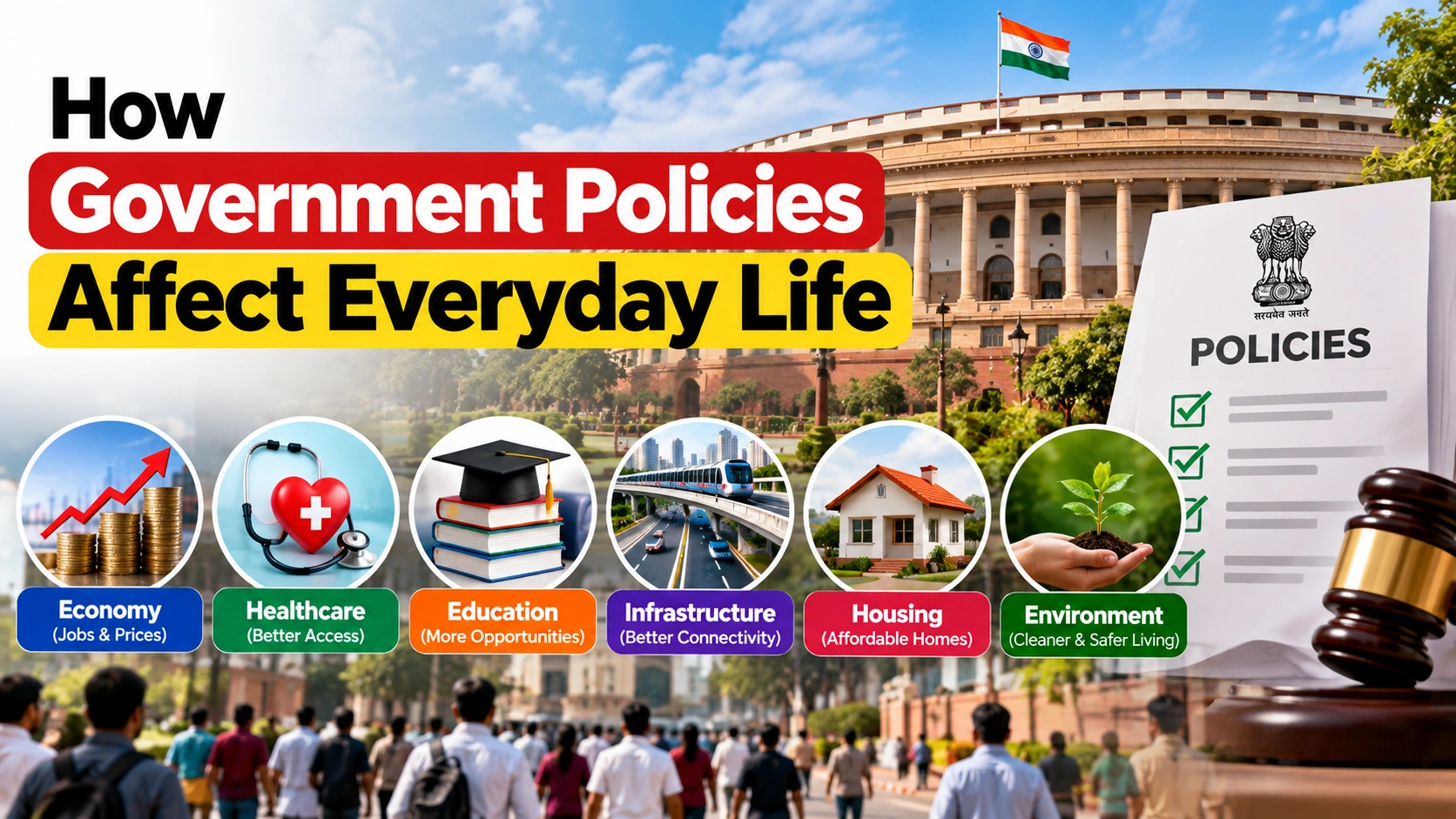
How Government Policies Affect Everyday Life

September 28, 2026
Government policies can sometimes seem distant from ordinary life, but they influence many of the decisions, services, costs, and rules people encounter every day. Policies shape areas such as education, healthcare, transportation, taxation, employment, housing, environmental protection, consumer safety, and public services. Regulations also affect the way businesses operate and the products and services available to consumers. The OECD notes that regulation reaches everyday areas including food and water safety, roads, buildings, electrical appliances, public services, and business activities.
Government Policies and Education
Education is strongly influenced by public policy. Governments establish rules for schools, set educational standards, allocate public funding, and create programs intended to expand access to learning.
Policies can influence teacher requirements, curriculum frameworks, school infrastructure, student support programs, and access to higher education. Changes in education policy may therefore affect students, parents, teachers, and institutions.
The effects can be particularly visible when governments introduce new approaches to digital education, vocational training, scholarships, or skills development.
Healthcare and Public Health
Healthcare policies can influence how medical services are organized, funded, regulated, and delivered. Governments may establish standards for healthcare facilities, medicines, food safety, sanitation, and disease prevention.
Public health policies can also affect everyday behavior. Rules concerning drinking water, food safety, tobacco products, workplace safety, and environmental quality are examples of government action intended to reduce risks.
The OECD describes regulation as an important tool for improving safety and reducing harm, while also noting that poorly designed or unnecessarily burdensome rules can create difficulties for people and businesses.
Taxes and Household Finances
Tax policies have a direct relationship with household finances. Income taxes, consumption taxes, property-related taxes, and other charges can affect how much individuals and businesses pay and how they allocate their money.
Government spending decisions also determine how public resources are used for infrastructure, education, healthcare, transportation, administration, and other services.
Understanding basic tax rules can therefore help individuals better understand their payslips, purchases, investments, and other financial responsibilities.
Transportation and Infrastructure
Government decisions can shape the roads people use, public transportation systems, traffic rules, parking regulations, and infrastructure development.
Investment in roads, bridges, rail systems, public transport, and pedestrian infrastructure can influence commuting times and accessibility. Regulations concerning vehicles, driving standards, and road safety also affect everyday travel.
Local government decisions can be especially noticeable because they may influence neighborhood roads, waste collection, drainage, street lighting, and other services.
Employment and Business Rules
Government policies also influence workplaces. Employment regulations may address areas such as minimum standards, workplace safety, working conditions, and employee protections.
Business regulations can affect how companies register, operate, advertise, hire employees, handle consumer information, and provide products or services.
These rules can create responsibilities for businesses while also establishing protections for workers and consumers. Effective regulation requires consideration of its practical effects on the people and organizations expected to follow it.
Environmental Policies
Environmental policies can affect air quality, waste management, water protection, energy use, construction, transportation, and industrial activity.
For example, regulations can establish standards for emissions, waste disposal, or the use of particular materials. Environmental decisions can have effects that extend beyond individual households because pollution and resource use can influence wider communities.
Digital Government and Public Services
Technology has changed how people interact with government. Many public services can now be accessed digitally, including applications, payments, registrations, and information services.
The OECD has highlighted digital government as a factor changing how citizens experience public services and participate in civic life.
Digital services can make certain administrative processes more convenient, although access to technology and digital skills can vary among different groups.
Why Public Participation Matters
Policies affect the people who live under them, which is why public participation can be relevant to policymaking. Consultation, public feedback, community organizations, and other participation mechanisms can provide governments with information about how policies affect people in practice.
The OECD states that involving citizens in policy design and service delivery can contribute to more transparent, inclusive, and accountable policymaking.
Policies Can Have Different Effects
A government policy rarely affects everyone in exactly the same way. A change in taxation may affect households differently depending on income. A transportation project may benefit commuters in one area more than residents in another. A new business regulation may create compliance costs while also providing consumer protections.
For this reason, understanding a policy requires looking at both its intended purpose and its practical effects on different groups.
Staying Informed
People can better understand government policies by reading official announcements, legislation, government reports, and reliable news coverage. Looking beyond headlines can help clarify what a policy actually changes, when it takes effect, and who is affected.
Being informed also makes it easier for citizens to provide meaningful feedback when consultation opportunities are available.